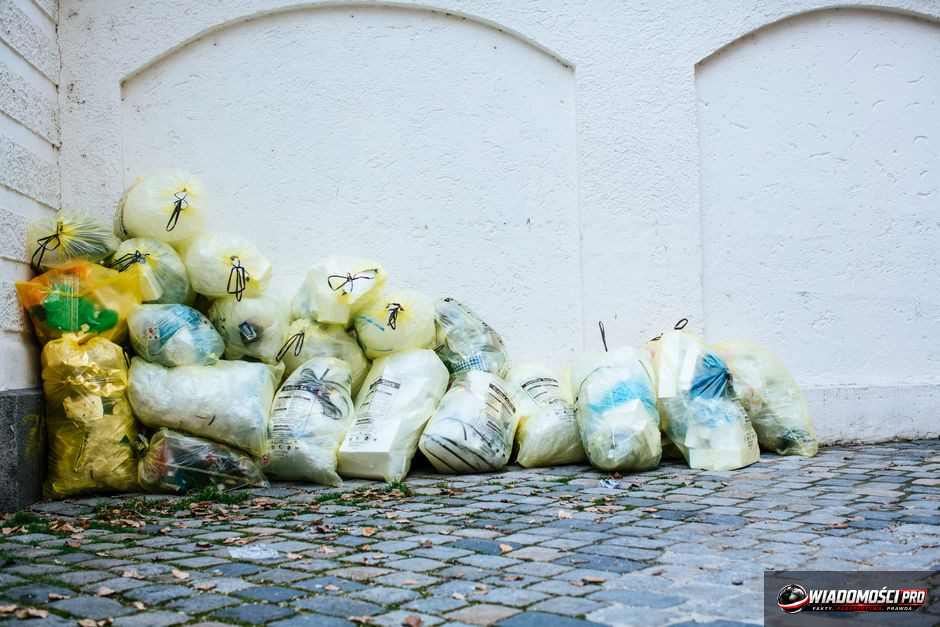
In brief
- From May 1, 2026, barcodes are becoming a real tool for identifying residents who do not follow sorting rules.
- The solution, tested since 2019 (including in Kartuzy in 2024), allows for the precise assignment of waste to its source.
- The introduction of codes is a response to growing challenges in tightening the waste collection fee system in Polish municipalities.
Evolution of the idea: from initial trials to nationwide debate
The idea of identifying waste using barcodes did not appear yesterday. As early as May 2019, salon24 pointed out that this technology would make it easy to track down residents who ignore sorting rules. The vision, which for many at the time sounded like a futuristic curiosity, has become the foundation of waste policy.
A year later, in June 2020, Fakty TVN reported on the Ministry's work on specific solutions in this area. The authorities saw barcodes as a way to tighten a system that had been struggling for years with the problem of dishonest waste declarations. However, the road from bureaucratic plans to real implementation was bumpy. As late as January 2021, Bezprawnik reported on plans to stick individual labels on bags, which sparked a lively social discussion. A month later, Business Insider cooled emotions, emphasizing that codes would not become a common standard across the country.
The breakthrough came with a local testing ground. In May 2024, the Kartuzy municipality implemented its own system based on barcodes in waste management, which became a model for other local governments. It was these early, often pilot actions that paved the way for current regulations.
Today, barcode-based systems allow municipalities to precisely assign a bag to a specific household. From May 2026, this tool became a key way to verify sorting. Although the technology has existed for years, it has only now gained real power. Municipalities have gained an instrument that verifies not only what we throw away, but above all – whether we are paying for the actual amount of waste we produce.
How does barcode technology tighten the sorting system?
How does barcode technology tighten the sorting system?
The system is based on a simple, though ruthless assumption: sticking individual barcodes on bags. This method has been tested in various Polish municipalities for years, but only since May 2026 has it become a common, official tool for verifying sorting. The logic of operation is clear. Each code is assigned to a specific household. When the waste collection company picks up a bag, the employee scans the label. In this way, a digital footprint is created.
Thanks to this, waste collection companies can track down residents in real-time who do not sort their waste or do so carelessly. If a fraction that should not be there is found in a bag with the "Jan Kowalski" code, the system automatically records the incident. Thus, we are moving away from collective responsibility, where everyone in an apartment building paid for their neighbors' mistakes. Now, responsibility is individual.
This mechanism is primarily aimed at tightening the waste management system in municipalities. Local governments are finally gaining hard data, not just estimates regarding the amount of waste produced. This is the end of the era of anonymity, in which dishonest residents avoided higher fees for unsorted waste. The catch? The effectiveness of this solution depends solely on the reliability of the collection companies when scanning. The technology is ready, but it is the human factor at the garbage truck that will decide whether the system actually eliminates fraud or becomes just an expensive bureaucratic gadget.
Where are codes becoming the new reality?
From May 2026, systems based on barcodes became an actual tool for verifying waste sorting. Municipalities are not implementing this technology uniformly or at the same pace. It is a selective process, often resulting from local desperation in the fight against dishonest practices, where residents dump trash or notoriously ignore recycling rules.
These actions clearly gained momentum this year, as confirmed by Money.pl reports from April 26, 2026. Local governments, seeing the rising costs of waste management, began to treat individual codes on bags as the only effective way to assign responsibility to a specific household. In practice, this means the end of anonymity when putting out waste.
Here is what the current implementation situation looks like:
- Systems are being implemented selectively, mainly where the problem with sorting and costs has become unmanageable. There is no talk of a nationwide mandate, and decisions are made at the municipal level.
- The strategy of fighting dishonest practices forces officials to reach for technology that seemed like an experiment just a few years ago, as written about in the context of Kartuzy or discussions in the media between 2019 and 2021.
- Verification of bags upon collection is becoming standard in municipalities that have decided to take this step, although each of them must face the costs of implementing readers and the logistics of distributing the codes.
Residents fear surveillance, which is visible in the social mood. However, from the point of view of municipalities, this tool allows for precise settlement. Whoever does not sort waste must pay. The era of waste fraud, where the costs of one person's waste were spread across the entire block or street, is slowly coming to an end.
Resistance and controversy: are residents afraid of change?
Resistance and controversy: are residents afraid of change?
The implementation of barcodes on bags from May 1, 2026, did not go unnoticed. Although these systems allow municipalities to precisely assign a bag to a specific household, which for local officials is a method for fair settlement of waste fees, residents do not hide their irritation. Emotions had been building for months, which was clearly expressed in the publication "Who is afraid of modern waste fees?" in "Życie Stolicy" on June 22, 2026.
The main points of contention are privacy and daily logistics. For many people, sticking codes on every bag before putting it out in front of the house is a burdensome duty that slows down household routines. There are fears that digital waste tracking is a step too far towards the surveillance of the ordinary citizen. People ask who has access to this data and what will happen to it after the waste is collected.
Municipalities refute the accusations, arguing that tightening the system is necessary. Without clear identification of bags, it is difficult to verify who is actually sorting waste and who is shifting costs onto their neighbors. This is a classic conflict of interest: the bureaucratic desire for order clashes with the natural need for freedom of the residents. Although these solutions were tested locally earlier, such as in Kartuzy in 2024 or in announcements from years ago, the nationwide scale of implementation is a completely different challenge. For now, there is a clear division between those who accept the new tools as a necessity and those who still see them only as another form of administrative oversight over the household bin.
What this means for you
For the average resident, the introduction of codes means the end of anonymity when throwing away trash. Local governments benefit, as better monitoring allows them to realistically lower system operating costs by eliminating sorting errors. The catch, however, remains the issue of personal data protection and the additional work that residents must perform before putting a bag out in front of the house.
Questions and answers
Will barcodes on trash be mandatory nationwide?
No, the decision to introduce codes depends on local municipal authorities, as confirmed by press reports from recent years.
What penalties are there for not sorting waste in the code system?
Codes allow for the precise tracking of people who do not follow the rules, which results in the imposition of fees for unsorted waste in accordance with local municipal regulations.
Is the barcode system expensive to maintain?
Implementing the system involves technological costs, however, municipalities treat it as an investment in tightening the system, which is intended to bring savings in the long term.
Sources
- Barcodes on trash bags? They checked what it's about - Money.pl
- Codes on trash bags from May 1. They will reveal those who don't sort - naTemat.pl
- Waste sorting – we will be sticking... individual barcodes on our bags - Bezprawnik
- Trash bags marked with a barcode? They will be, but not everywhere - Business Insider Polska
- Kartuzy. New solution for waste management. There will be barcodes - expresskaszubski.pl
- Who is afraid of modern waste fees? - Życie Stolicy
- Waste sorting with barcodes. Easy to track down non-ecological residents - salon24.pl
- Will trash bags be marked? The ministry is working on solutions - Fakty TVN


Komentarze (0)
Ładowanie komentarzy...