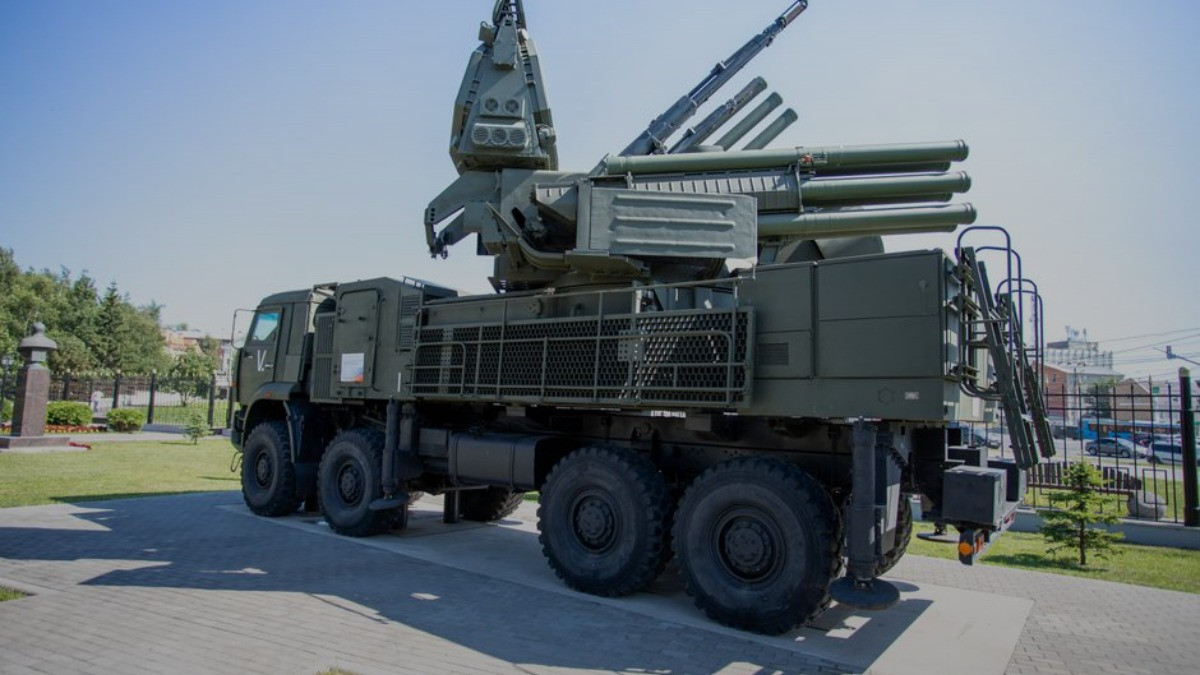
Patriot systems remain in the Ukrainian arsenal, but their activity has been limited as a result of the change in US priorities in March 2026, which necessitates a more frugal and selective use of missiles. The Ukrainian command is refraining from routine interceptions to preserve resources for critical situations, which is a direct consequence of Washington's new policy. The batteries have not disappeared from the front, but their role has been reduced to point defense of infrastructure of the highest strategic importance.
Change in Washington's technical policy
The decision of March 26, 2026, reported by "Rzeczpospolita," marked a turning point in the logistics of supplies for Kyiv. The Pentagon did not decide to physically relocate the batteries outside of Ukraine's borders, but it drastically limited the flow of interceptor missiles. Every launch of a Patriot battery is now verified against the risk of depleting stocks, which forces Ukrainian operators to perform brutal war mathematics. Missiles are not fired at every detected target. Commanders must decide whether a given infrastructure object is important enough to sacrifice a resource worth millions of dollars to defend it.
In practice, this means that the Ukrainian sky is becoming "full of holes." In places where Patriots previously operated, the burden of defense is now being taken over by short-range systems, such as the German IRIS-T or the Norwegian-American NASAMS. These are cheaper to operate and easier to replenish, but they do not possess the capability to combat ballistic targets at the distances and altitudes that Patriot batteries are capable of. This change does not stem from a lack of willingness on the part of Ukrainian crews, but from the necessity of optimization imposed by an ally. The Pentagon, facing its own supply chain challenges, set a hard condition: the priority is the protection of decision-making centers and major energy hubs, not full dominance of the airspace over the entire country.
This new strategy forces the Ukrainians to switch to passive defense in less important sectors. Instead of actively combating every threat, Patriot systems operate in an "observation and point defense" mode. The system's radar is turned on only at moments of highest threat so as not to reveal the launcher's position to hostile electronic reconnaissance. Every minute of radar operation is meticulously measured. This approach means that Russian drones and shorter-range missiles have greater operational freedom deep within Ukrainian territory. The cost of this saving is measurable – it is more frequent strikes on infrastructure that were previously avoided.
The threat from Oreshnik and Ukrainian tactics
The debate from September 11, 2025, mentioned by the website wszystkoconajwazniejsze.pl regarding the Oreshnik missile, shed new light on the risks faced by Patriot crews. A new class of weapon, which the Russians experimented with during the Zapad 2025 exercises, forced a complete change in the way batteries are positioned. To be effective, a Patriot must be "visible" to its own radars, which makes it susceptible to retaliatory strikes. Faced with the threat from Oreshnik, which possesses the capabilities to penetrate traditional anti-missile systems, every Patriot battery has become a priority target for Russian intelligence.
The Ukrainians have implemented "leapfrog" tactics – batteries are no longer stationed in fixed positions. They are constantly being moved, which is intended to confuse Russian reconnaissance systems. However, this requires a huge logistical effort. Setting up and taking down a Patriot battery is a complex operation involving dozens of vehicles and specialists. Each such maneuver is a period of time during which the sky remains unprotected. This is the price Kyiv must pay for the survival of its most valuable anti-aircraft assets. It also forces them to abandon the construction of permanent, heavily fortified firing positions in favor of improvised points in difficult terrain.
Fields and forests have become the new homes for Patriot crews. This is not a comfortable situation, but it is the only one possible given the limited number of launchers. Any loss of a battery would be an irreversible blow to Ukraine in the short term, given Washington's restraint in deliveries. Therefore, the command decided to radically limit electromagnetic emissions. The systems operate in a passive mode, relying on data from external sources, which increases the chance of crew survival but, paradoxically, reduces the effectiveness of intercepting targets with a low radar signature. This is a dangerous game in which Ukraine balances between the necessity of defending against attacks and the necessity of protecting its own equipment.
Regional security and the Baltic architecture
In the shadow of Ukraine's problems, Poland is building its own security architecture, which is directly linked to decisions made within NATO structures even before the escalation of tensions in the east. Deputy Prime Minister Władysław Kosiniak-Kamysz's announcement on June 14, 2024, regarding a rotational command in the Baltic in cooperation with Germany and Sweden, is becoming part of a larger puzzle today. Faced with limitations in Patriot deliveries to Ukraine, the countries of the eastern flank have understood that they must rely on their own coordination and regional resources.
Building a joint command system in the Baltic is not just a matter of controlling the waters. It is primarily an attempt to secure the airspace against Russian dominance, which could be used to exert pressure on the countries of the region. Poland, Germany, and Sweden, by sharing responsibility for command, are creating a mechanism designed to deter the aggressor from testing NATO's cohesion. In the context of the situation in Ukraine, this regional cooperation aims to "free up" some anti-aircraft resources that would otherwise have to be spread across too wide a front.
Warsaw is not waiting for a return of American engagement to the levels of 2023–2024. Poland's strategy is based on the assumption that the eastern flank must be able to respond to threats independently in the short term. Cooperation with Berlin and Stockholm is a way for Poland to minimize the risks stemming from the instability of equipment supplies from the USA. If Washington limits support for Ukraine, Poland must be sure that its own defense systems are synchronized with NATO partners, which prevents a repeat of the Ukrainian scenario on its own territory. This is a pragmatic approach, based on cold political calculation rather than optimistic assumptions about eternal support from allies.
Evolution of the air defense model
The Ukrainian army has abandoned the concept of a full protective umbrella over the entire territory of the country. Instead, faced with the limitations resulting from Washington's March decision, the command in Kyiv has implemented a model of so-called distributed defense. Patriot batteries no longer operate in continuous mode, which allows for saving expensive interceptor missiles. This is a hard tactical choice. Resources have been redirected exclusively to securing infrastructure of critical importance, which means that smaller urban centers must cope using much less effective short-range systems, such as the aforementioned IRIS-T or NASAMS.
This model is an admission of material weakness. The Ukrainians can no longer afford the luxury of shooting down every target. Now, what counts is not so much effectiveness as the survival of the batteries themselves, which have become a scarce resource rather than a standard tool of daily combat. Every missile fired today is the subject of a political cost-benefit analysis. Ukraine must choose between protecting a power plant and protecting population centers, which is a dilemma that no command should have to solve.
This situation also shows how much modern warfare depends on logistics. Even the best system, which the Patriot undoubtedly is, becomes useless without a constant influx of ammunition and maintenance support. The limitations imposed in March 2026 created a new reality in which the "silence" of the Patriots is the result of a thought-out survival strategy, not a lack of awareness of the threat. Ukraine is now fighting for time, counting on the fact that the shift in US priorities is only a transitional stage, not a new standard in relations with allies. Whether this calculation proves correct depends on the further development of the situation on the front and on whether Russia decides to make full-scale use of its new weapon, which remains a great unknown for Ukrainian defense systems.
What this means for you
The change in US strategy from March 2026 means that Ukraine must rely on more diverse defense systems, which favors suppliers of short- and medium-range solutions like IRIS-T or NASAMS. For civilians, this means living in conditions of greater uncertainty, because Patriots no longer guarantee full cover against long-range missiles. The catch lies in the risk that Russia will use the limited use of Patriots to intensify attacks on targets that were previously considered safe.
Questions and answers
Has Ukraine actually stopped using Patriot systems?
No, the systems are still in use, but their activity has been limited to protecting the most important targets due to the change in US support policy from March 2026.
Why are Patriot batteries hidden in fields more often?
Hiding the batteries is a necessary reaction to the threat from advanced Russian missiles, such as the Oreshnik, which are designed to detect and destroy radar systems.
How does Poland's role in the Baltic affect the situation in Ukraine?
Poland's cooperation with Germany and Sweden in the Baltic stabilizes the NATO flank, which allows for better coordination of anti-aircraft resources throughout the Central and Eastern European region and relieves the systems operating in other parts of the continent.
What systems are replacing Patriots in daily defense?
In places where Patriots are being saved, protection is taken over by shorter-range systems, such as IRIS-T and NASAMS, which are cheaper to operate but have lower capabilities in terms of combating ballistic targets at long distances.
Was the US decision of March 2026 a complete withdrawal of support?
No, it was not a withdrawal of support, but a deep revision of logistical priorities, which imposed on Ukraine a requirement for more restrictive and frugal management of interceptor missiles.
Is the threat from Oreshnik real?
According to reports from September 2025, this missile represents a new class of threat that forced Ukrainian commanders to change operational tactics and move away from stationary firing positions.
What does the term "distributed defense" mean in the Ukrainian context?
It is a model in which Patriot batteries do not create a uniform umbrella over the entire country, but are mobilely deployed to protect only the most critical infrastructure points, while simultaneously limiting radar emissions to avoid detection.



Komentarze (0)
Ładowanie komentarzy...