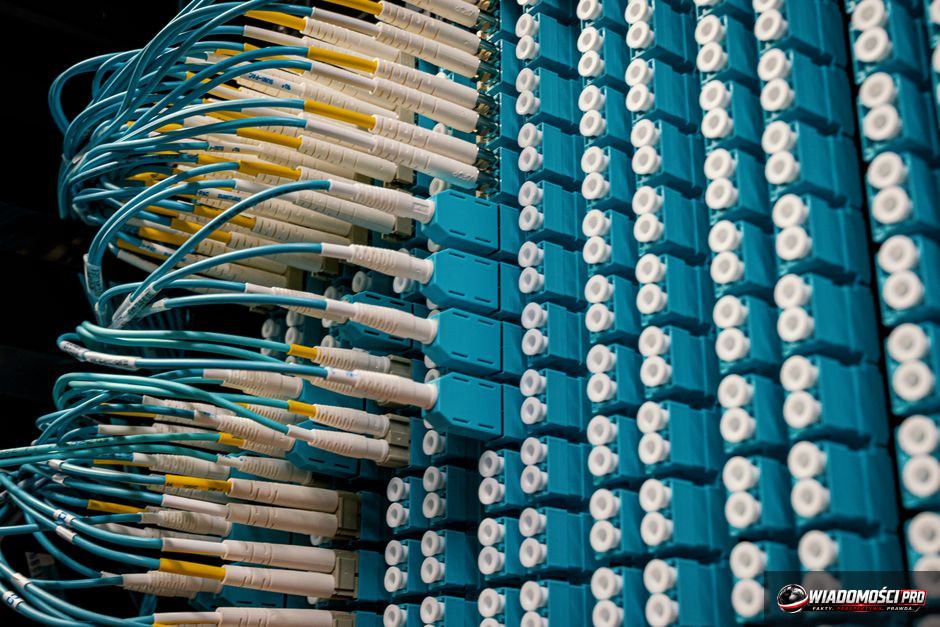
Deutsche Telekom is acquiring INEA and Fiberhost for one billion euros, gaining control over fiber-optic infrastructure serving 1.4 million Polish homes. For the telecommunications market in Poland, this transaction signifies the takeover of a significant segment of the access network by an entity with foreign capital. This change forces local internet service providers to redefine their commercial strategies in the face of the new ownership structure of Fiberhost, which until now had served as the foundation for many smaller players.
Mechanisms of influence on the wholesale market
The acquisition of Fiberhost by a capital group linked to Deutsche Telekom changes the rules of the game in the open access model. This model is based on the premise that the infrastructure owner makes its lines available to other retail operators on transparent terms. However, the introduction of a global operator as the network owner shifts the balance of power. T-Mobile, as an entity within the group, gains a natural advantage in accessing its own infrastructure compared to local providers who, until now, treated Fiberhost as their primary tool for expansion in the regions.
The risk for the market lies in the shift of operational burden. If the network owner decides to change wholesale price lists, smaller operators may hit a wall. Maintaining current margins will become impossible without raising prices for the end customer. There are many indications that the Deutsche Telekom group will strive to maximize return on investment, which, with such a high transaction valuation of one billion euros, is a financial priority. For local providers, this means the necessity of renegotiating contracts in an environment where their bargaining power has drastically decreased.
The Open Access model gains a new manager whose goals are strictly correlated with the results of the global corporation. Contractual uncertainty becomes a real threat to companies that do not possess their own infrastructure and rely entirely on leasing fibers. The lack of publicly available information regarding modifications to wholesale tariffs after the acquisition suggests that the market is in a wait-and-see phase. Retail operators must prepare for a transition period in which technical and pricing standards will be dictated from headquarters in Bonn, rather than based on the local needs of Polish providers.
Strategic dimension of the investment
Investing in an existing fiber-optic network is a much more efficient solution for Deutsche Telekom than building infrastructure from scratch. Administrative processes in Poland, related to obtaining permits for earthworks, building connections, and occupying road lanes, take years. By acquiring Fiberhost, the German giant gains access to 1.4 million homes almost overnight. This approach allows for the immediate scaling of services in densely populated regions, which is crucial in the fight for customers in the era of convergent services, combining fixed-line internet with mobile 5G.
Acquiring ready-made coverage also allows for rapid network modernization. Deutsche Telekom has the capital and technology that can accelerate the replacement of old fiber-optic segments with more modern data transmission standards. The question is whether the investor will decide on intensive expansion or focus solely on monetizing the already existing network. The history of similar transactions in the telecommunications sector indicates that a period of deep cost optimization follows a merger. This means reducing overlapping administrative structures and automating technical support, which may affect the speed of response to failures in smaller towns.
Legal status and UOKiK regulations
The billion-euro transaction is subject to mandatory control by antitrust authorities. According to procedures, the acquisition of such significant infrastructure must be analyzed by the Office of Competition and Consumer Protection (UOKiK). At the current stage, the transaction is in the analysis phase, and the antitrust authority is examining whether the acquisition of control over Fiberhost by Deutsche Telekom will lead to a restriction of competition in the wholesale market.
For the investor, it is crucial to obtain approval without orders to divest part of the assets. If UOKiK detects a risk of monopolization, it may impose obligations on the new owner regarding the maintenance of open access to the network under strictly defined pricing conditions. Such a decision would be a safeguard for smaller ISPs, but at the same time, it would limit Deutsche Telekom's business freedom. The lack of a final decision from the regulator causes anxiety among competitors, who fear that after the merger, their market position will be permanently weakened by an operator of global scale.
End-user perspective
For the end customer, changes in the ownership structure of INEA and Fiberhost may initially go unnoticed. These brands are deeply rooted in consumer awareness, so a sudden rebranding is unlikely. However, under the mask of familiar names, a deep operational restructuring may occur, which will affect the quality and price of services. Market consolidation usually leads to an increase in package prices in periods after the end of promotions for new customers. When competition in a given area is limited to one infrastructure provider, price pressure naturally decreases, which gives the new owner more room for maneuver regarding price hikes.
Market analysis also suggests a risk of phasing out investments in regions with lower profitability. If Deutsche Telekom focuses on maximizing the return on assets in large agglomerations, residents of smaller towns may be cut off from planned network modernizations. In this arrangement, the end user becomes a beneficiary of a stable network but at the same time a hostage to the giant's pricing policy. The lack of a real alternative in the form of another fiber-optic operator in a given apartment building or district is the most serious consequence of consolidation.
Challenges for digital sovereignty
Fiber-optic infrastructure today forms the foundation of a modern economy. Sensitive data, both private and business, as well as traffic related to public administration, flow through these cables. Transferring control over these connections into the hands of a foreign entity requires special vigilance from telecommunications regulators. In the event of a failure of a network managed centrally by the new owner, the consequences will be felt not only by individual customers but also by public institutions and enterprises dependent on a stable connection.
Experts point out that the concentration of ownership in the hands of foreign capital goes beyond a purely economic calculation of profit and loss. Managing transmission links becomes an element of systemic security. Decisions made at the headquarters in Bonn will directly influence technical network standards in Poland, including security protocols or the speed of modernizing obsolete infrastructure segments. Will the investor bet on intensive network modernization, or will they limit themselves to maximizing profits from existing lines? The answer to this question will define the quality of internet services for millions of Poles in the coming decade.
Scenarios for the future
Forecasts regarding the market after August 17, 2026, point to an acceleration of consolidation processes throughout the entire telco sector. Smaller operators, unable to compete with capital on the scale of a billion euros, may seek shelter within larger capital groups or limit their reach to niche local services. T-Mobile's strategy, assuming full control over access infrastructure, is a clear signal to the entire market. Instead of building, it is better to acquire. This approach is cost-effective but carries systemic risk.
Polish telecommunications companies, which have built their networks over the years with enormous capital effort, are now becoming beneficiaries of the merger, receiving valuations that allow for exiting the market with a profit. This is understandable in business terms, but from the state's point of view, it means losing control over assets that are crucial for the country's digital development. The market faces the challenge of maintaining the diversity of offerings that has been the greatest asset of the Polish ISP industry over the last two decades. Without decisive intervention by regulators, the market may become an oligopoly in which decisions about internet access are made by a handful of international corporations.
The further development of the situation will depend on how quickly Deutsche Telekom integrates the acquired entities into its structure. If this process goes smoothly, we can expect a standardization of service standards and faster implementation of modern technologies. On the other hand, any attempt to impose monopolistic wholesale rates will meet with resistance from smaller players, which may lead to long-term legal disputes before the UKE. The coming months will be a test period for the Polish telecommunications market, which is entering an era of consolidation dictated by big capital.
Questions and answers
What was the total value of the INEA and Fiberhost acquisition transaction?
The transaction was finalized for the amount of one billion euros.
How many households does the acquired fiber-optic infrastructure cover?
The network acquired by Deutsche Telekom reaches 1.4 million Polish homes.
Will the acquisition affect prices for end users?
Mechanisms of influence on prices will depend on the operator's future wholesale policy; there is a risk of less competitive pressure in regions where this infrastructure is the only one available.
What strategy has Deutsche Telekom adopted toward the Polish market?
The German giant is focusing on acquiring ready-made assets instead of building its own network, which allows for faster expansion and gaining control over the wholesale market.
Has the transaction already been approved by UOKiK?
The transaction is currently in the analysis phase by the antitrust authority, which is examining its impact on competition in the telecommunications market.
What are the risks for smaller operators operating on the Fiberhost network?
The main threat is uncertainty regarding future wholesale price lists and the possibility of prioritizing the operator's own services over competitors' offers.
What does the loss of control over fiber-optic infrastructure mean for the Polish market?
It means a change in the business model, in which key decisions regarding network modernization and access conditions are made at the headquarters of a foreign corporation, which may affect systemic security and the innovation of the domestic offer.
What are the main challenges for the regulator in this situation?
The regulator must ensure equal access to infrastructure for all players to prevent market monopolization and protect the interests of smaller providers and consumers.
Why did Deutsche Telekom choose this path of expansion?
Building a network from scratch involves multi-year administrative procedures, while acquiring ready-made assets allows for immediate scaling of services and entry into the market with a strong position.
Will the telecommunications market in Poland be subject to further consolidation?
Forecasts point to an acceleration of consolidation processes, where smaller players will be forced to merge into larger groups or limit their activities to market niches.
Sources
- Digital partition of Poland? German giant takes over key fiber optics. 1.4 million homes under Berlin's dictate - Radio Bezpieczna Podróż
- T-Mobile arms itself with fiber optics. Deutsche Telekom buys INEA and Fiberhost for a billion euros - Next Gazeta.pl
- Deutsche Telekom buys Fiberhost and Inea. German giant enters Polish fiber optics more strongly - ISPortal
- Germans want to arm the Polish army. They revealed a list of projects - Money.pl
- HelloFresh enters Poland! German food giant: "We are not looking for the cheapest" - Wiadomości Handlowe
- German defense giant to invest in Poland. "Ideal place" - Wiadomości Onet
- Record transaction on the Polish market. German giant buys over 5,300 apartments - INNPoland.pl
- German company buys thousands of apartments in Poland. "A clear signal for foreign investors" - Radio ESKA



Komentarze (0)
Ładowanie komentarzy...