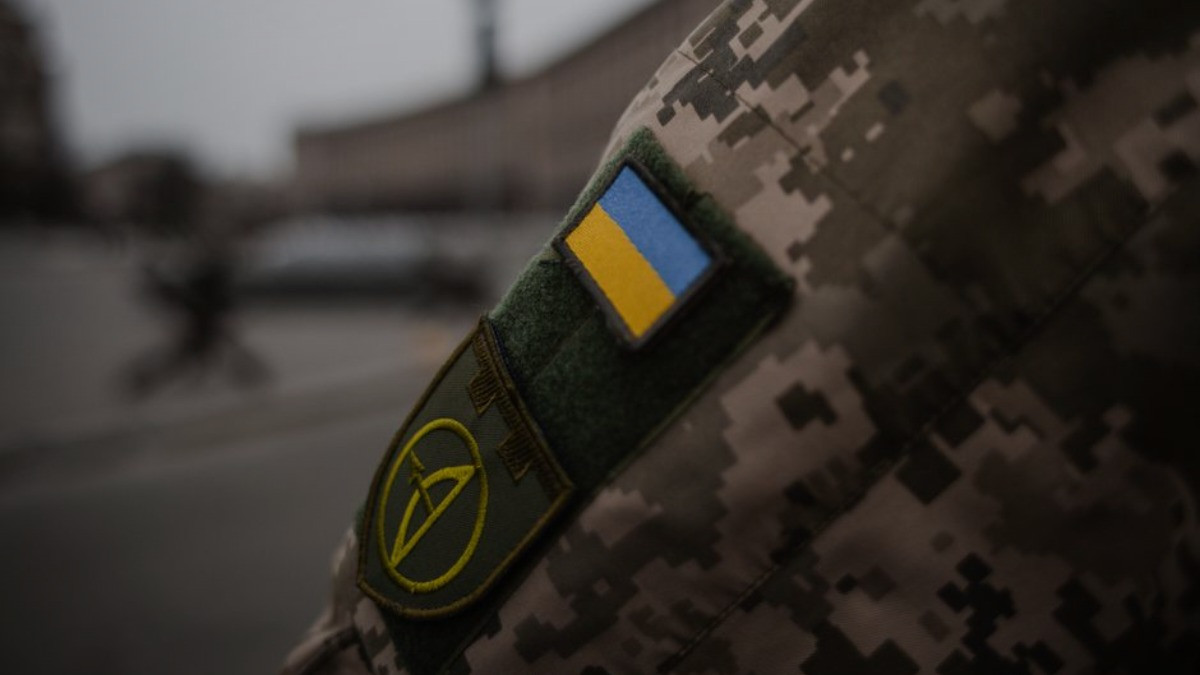
The European Union has approved €6.1 billion in support, which will be entirely allocated to defense procurement, primarily for air defense systems and missiles. This decision is a direct response to the growing needs of the Ukrainian army in the face of ongoing aggression. The funds will be released as part of the expanded Ukraine Facility, which precludes their use for any other budgetary purposes.
A symbolic decision on Independence Day
The date of August 24, 2026, was not chosen by accident. Announcing the financial package on Ukraine's Independence Day serves as a political manifesto. Brussels, following the declarations of politicians such as Friedrich Merz, is sending a clear signal: European commitment to arming Kyiv remains a priority, even in the face of rising costs of maintaining the front. However, this is not merely a symbolic gesture. From the perspective of EU bureaucrats, the €6.1 billion is an attempt to stabilize the situation in the region before the upcoming autumn-winter season, when Ukraine's energy infrastructure will become the primary target of missile attacks.
This decision was made at a time when there is increasing talk within the Community about the limits of financial endurance. Despite this, the European Commission managed to push through a mechanism that bypasses traditional, often protracted aid paths. The speed of processing this decision suggests that the conviction of a direct threat to the security of NATO's eastern flank has prevailed in Brussels. Polish and Baltic diplomats have been pointing out for months that a lack of decisive reaction to the systematic destruction of the Ukrainian air shield will cost Europe much more than the billions invested in defense systems.
Choosing this moment is an attempt to silence skeptical voices coming from some European capitals. The message is clear: support is not being phased out. However, it is evolving. Instead of general financial aid, we are dealing with precise funding for the military sector. For Moscow, this is a message about a long-term strategy of depleting Russian aviation resources by saturating the Ukrainian sky with Western technology. But will this political signal be supported by an equally fast pace of physical equipment deliveries? That question remains open. Past experience shows that months pass between the decision to transfer funds and the moment a missile hits a launcher in the Kyiv or Kharkiv region.
What will the €6.1 billion be spent on? Defense priorities
The European Commission has set strict conditions. The money cannot be spent on civil servant salaries or on patching holes in the Ukrainian budget. The funds are dedicated to specific technological solutions. At the top of the shopping list are medium- and long-range air defense systems, which are essential for protecting urban agglomerations and logistics hubs.
In practice, this means orders for Patriot batteries produced by the Raytheon and Lockheed Martin consortium. Due to their sophistication, these systems require not only expensive interceptor missiles but also constant maintenance and spare parts supplies. Another piece of the puzzle is the German IRIS-T systems, manufactured by Diehl Defence. Their effectiveness in Ukrainian conditions has been confirmed during combat, which makes every additional euro invested in this technology seen as a secure investment in the safety of critical infrastructure. The package also includes NASAMS systems, for which the Norwegian company Kongsberg is responsible in cooperation with the American Raytheon. This solution has proven effective in combating cruise missiles and Shahed-type drones, which have been the primary method of striking the Ukrainian rear for two years.
The documents show that the funding is split into two segments. The first is the purchase of ready-made systems from allied countries' stockpiles, which is intended to provide immediate support. The second is long-term orders from European and American factories. The catch is that the production capacities of companies like Rheinmetall or Diehl Defence are currently exhausted. Even with billions of euros in hand, Ukraine must get in line. The European defense industry, underinvested for decades, is struggling with shortages in the supply of electronic components and raw materials. Money will not speed up production lines if there is a lack of qualified engineers or specialized metal alloys. Every billion pumped into this sector is therefore also an attempt to force corporations to increase the scale of production, which is an extremely complicated process in a free-market environment.
Financing analysis: The Ukraine Facility
The financing mechanism is based on a specially created instrument, which is intended to be more flexible than cohesion funds. Brussels has imposed rigorous oversight on the flow of funds. Each tranche is audited to avoid allegations of corruption or mismanagement. This is a response to the concerns of taxpayers in member states who want to be sure that their contributions are not fueling the gray market.
From an economic point of view, the €6.1 billion is a financial injection that will largely return to European economies. Defense companies, such as the aforementioned Rheinmetall or the European branches of Lockheed Martin, are the main beneficiaries of these contracts. Kyiv receives technology, but the price for this is dependence on Western service lines. This is not a partnership in the full sense of the word, but a customer-supplier relationship in which the manufacturer dictates the terms. For the Ukrainian economy, this means an inability to build its own independent industry in sectors with the highest degree of technological advancement.
It is also difficult to ignore the fact that EU bureaucracy imposes its own tender procedures. In wartime conditions, where a week's delay can mean the loss of another power plant, EU requirements regarding procurement transparency can become a brake. Kyiv must navigate between the requirements of Brussels and the need to maintain continuity of supply. It is a balancing act on the edge. On one hand, there is the need for financial accountability; on the other, the brutal reality of the front, which does not recognize accounting schedules. It is worth noting that in this transaction, it is the European corporations that take on the business risk, but it is Ukraine that bears the operational risk if deliveries are delayed by bottlenecks in supply chains.
Impact on the situation at the front
Focusing resources on air defense is an admission of a mistake made at an early stage of the conflict. For too long, there was a reliance on the hope that Soviet S-300 systems would be enough to secure the airspace. Today, as the supply of missiles for these systems is running out, the only way forward is a complete transition to NATO standards. The €6.1 billion will allow for the financing of the purchase of thousands of PAC-3 interceptor missiles for Patriot systems or IRIS-T-SLM missiles, which, unlike older designs, offer much higher effectiveness against modern Russian ballistic missiles.
The real impact on the front will only be felt after months. Air defense systems are not just launchers; they are primarily an extensive network of radars, command posts, and trained crews. Cash alone will not build technical competence. Ukrainian soldiers must be trained to operate Western systems at training centers in Germany or Poland, which further extends the process from decision to actual use of the weapon.
It is worth being aware that €6.1 billion is a significant amount, but at the current rate of ammunition consumption by the Ukrainian side, it is only a drop in the ocean of needs. Estimates indicate that the cost of protecting just one major city from a massive missile attack can reach tens of millions of euros in just a few hours. This means that EU support does not end the needs, but merely postpones the date by which Kyiv would have to declare insolvency in the area of air defense. The success of this package therefore depends not only on money, but on whether European producers will be able to maintain the production pace in 2027 that they only mention today in their financial reports to shareholders.
What this means for you
For citizens of the European Union, this means confirmation of the path chosen by the Community: full commitment to the security of the eastern flank. For Ukraine, it is a signal that it can plan its defense in a perspective longer than a quarter. However, for the taxpayer in Warsaw, Berlin, or Paris, this is information about more billions that will not go to civilian projects, but into the skies, in the form of interceptor missiles. The discussion about whether the EU budget should fund armaments on such a broad scale will only intensify in the coming months, especially in countries where public sentiment toward the war is beginning to change.
Questions and answers
Is this €6.1 billion direct cash aid?
No. These funds are strictly earmarked and intended for defense procurement, mainly air defense systems and missiles, implemented under the EU's Ukraine Facility. The money is paid out after the verification of defense contracts.
Why did the EU decide to pay out right now?
The decision was made around Ukraine's Independence Day as a political signal. Furthermore, the depletion of anti-aircraft ammunition resources on the Ukrainian side forced the European Commission to accelerate decision-making processes to avoid a critical gap in defense before winter.
Who is responsible for spending these funds?
The funds are distributed under the supervision of the European Commission, which works directly with the Ukrainian Ministry of Defense and selected defense suppliers. Every expenditure is subject to rigorous audit procedures to ensure that funds are used exclusively for military purposes.
Sources
- Video. "We are increasing aid": EU approves €6.1 billion for Ukraine's defense - Euronews
- EU releases €6.1 billion for Ukraine. Merz promises unwavering support - Onet
- The Union provides Ukraine with more billions for defense. The decision is made on an important day - Business Insider Polska
- €6.1 billion for Ukraine's defense - poland.representation.ec.europa.eu
- EU approves over 6 billion euros in aid for Ukraine. - Vietnam.vn
- New defense orders for Ukraine. European Commission approves €6.1 billion - Portal Obronny
- Ukraine orders equipment for €6.1 billion. EU makes a move - Money.pl
- EC approves aid for Ukraine. €6.1 billion for air defense systems and missiles - Polskie Radio 24

Komentarze (0)
Ładowanie komentarzy...